
Back to Homepage
Exegesis
The exegesis of this PhD by research on transnational investigative journalism is HERE.
Introduction to TIJ Methodology
This research identifies the main elements that take part in the production process of journalistic investigative reports involving more than one country. The analysis of each of the elements as well as their interactions are instrumental to allow the author of this investigation to propose a methodology that includes both theory and practice.
The dialogue with experienced and highly qualified investigative reporters from different cultural backgrounds during the consultation process has enriched this investigation, resulting in a methodological proposal that is both a common ground for the best professional practice, as well as a space of open dialogue that welcomes diversity of narratives.
This thesis is driven by the increasing number and impact of global investigations like the 2016 Panama Papers or the 2015 Swiss Leaks. They exemplify the relevance of sharing information and the key role that non-traditional media organisations -such as the International Consortium of Investigative Journalists- are playing in the production of high-impact stories.
In-depth coverage of critical transnational wrongdoings has amplified the need to establish a well-conceived “transnational investigative journalism”. I define it as collaborative forms of investigation between reporters of different countries to bring to light stories of wrongdoings involving two or more countries). In this sense, the author of this thesis, who is also an investigative journalist, sees Transnational Investigative Journalism (TIJ) as a significant new paradigm in contemporary journalism. These new ways journalists have found to work across borders are a response to the global nature of wrongdoings, which have redefined both the practice of the profession as well the framing of the narratives.
The need to conceptualise the practice and to make visible the invisible processes behind the investigations led to this research – this website www.tijmethodology.com and an exegesis- that outlines a methodology designed to assist in the process of trans-border investigative journalism. A booklet (Melgar, 2017) details the steps of the methodology and facilitates practical tools:
https://drive.google.com/file/d/0B51OzjwudwppQUg0M2owNnd0Z0U/view
It includes the multicultural dimension –in the ideological-normative sense- that contemplates diverse narratives in the story building process: how the story is framed, what voices are included and the tone. The author proposes the first methodology for the best practice of transnational journalism from a multicultural perspective, a conversation that is both practical and philosophical. More than 40 top investigative journalists were interviewed from Europe, Latin America and Australia and more than 50 from around the globe participated through an online questionnaire.
These interviews were crucial to explore the diversity of professionalpractices, which was key to answer the research question.
When this research was proposed, the 2015 Swiss Leaks represented the biggest development of a cross border collaborative model that brought together a team of 86 journalists from 46 countries through a complex 15-month investigation. It was followed by The Panama Papers where the International Consortium of Investigative Journalists, together with the German newspaper Suddeutsche Zeitung and more than 100 other media partners exposed the identities of shareholders and directors of 214,000 shell companies set up by Mossack Fonseca, a Panamanian law firm and corporate service provider.
This kind of collaborative model has spread in the last ten years at the same time that big media organisations’ investigative units were reduced and in many cases dismantled. Independent journalists have been creating their own digital platforms.
In an interview for this investigation, Guilherme Canela, Unesco’s adviser in Communication and Information for MERCOSUR reflects on the lights and shadows of the changes that are happening in the media landscape.
“Media´s decreasing investment in investigative units is a problem for investigative journalism at a national level, and of course, it´ll affect other collaborative ways as well. That´s why I think transnational works will be increasingly coordinated with these new experiences of investigative journalism, that are on line, that are organised as small business structures, that are new business models. In Latin America there are many in all the countries of the region, they are very successful in terms of quality, and have more legal freedom in their business model to cooperate amongst them”.
And for stories that were once impossible for them to investigate -without the support of an established media organisation– digital connectivity has given them access to world-wide transnational collaborations. A diverse range of alternative models to produce investigative stories developed and collaboration through a robust network of reliable journalists is a common denominator of most alternative models of investigative journalism.
Even though it continues growing, investigative journalism across borders is still a very new discipline with almost no academic literature that reflects on the methodologies and production processes behind the investigations, including the complexity of practical and editorial decisions behind these new global narratives. In 2017 the Journal of Applied Journalism and Media Studies made a call for papers on cross-border journalism, to be published in 2018 and edited by Danish Brigitte Alfter and Romanian Stefan Cândea. They explain why it is important to discuss the growing practice of transnational journalism: “there is yet no agreement on an acceptable definition(s) to describe this journalistic genre and the processes it involves, as well the promises and perils it entails” (Alfter, Candea, 2017).
In the light of the work of Lee and Skewes (2003) this thesis aims to explore how the combination of knowledge and cultural context makes transnational journalism a growing form of collective intelligence, challenging the traditional individualistic journalistic behaviours and practices.
Based on the experience of the author of this research and the analysis of the participants’ views, the methodology proposed is the practical outcome of this PhD that answers the research question in order to “establish a methodology for the performance of transnational investigative journalism in a global multicultural and trans border scenario.”
The website has three main parts: the methodology; an index to find investigative journalists; and the videos of the interviews with the journalists that helped shape the methodology. The website –the artefact of this PhD- aims to be an open and dynamic platform that starts a cross border dialogue of how journalists agree to work collaboratively.
The Author
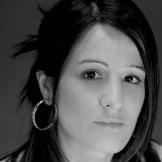
Florencia Melgar Hourcade is a Uruguayan – Australian investigative journalist with 25 years of experience working across platforms for Latin American, Canadian, American, Spanish and Australian media and organisations.
Today she works as Editorial and Operations Manager for News and Current Affairs at Australia’s public multicultural broadcaster, SBS.
Florencia is passionate about bringing together teams from diverse backgrounds to collaboratively produce media content, challenging the usual narratives of the dominant culture.
In 2023, Florencia led the production of SBS’s first organisation-wide Style Guide, including the first editorial guidelines for impartial and accurate geographic representation of contentious border and areas.
In Uruguay she published a number of investigative works, being “Sabotage to the Truth” the longest investigation, published by Planeta. The book brought to light new information on a cold case from the dictatorship involving the murders of two members of Parliament. The investigation led the Prosecutor to reopen the case and assisted in the prosecution of a former dictator.
Her productions in “No Toquen Nada”, Uruguay’s highest-rating current affairs radio program represented an innovation of how to do investigative journalism in radio (2006- 2010). During the same period, Florencia designed and delivered investigative journalism courses for young journalists.
She worked for Uruguay’s public television. She was also a media adviser for organisations like the United Nations for Development Program in Uruguay, the Canadian Embassy in Montevideo, and the Spanish Government cultural affairs’ “Cervantes Institute” in Sydney.
As an independent journalist and project manager, Florencia was awarded three grants from the Australian Federal and NSW governments between 2011 and 2013 to carry out community media projects that concluded in a series of 9 short documentaries on refugees; a bilingual book on Latin American refugees in Australia; and a series of short documentaries made by Spanish speaking international students.
In 2013 Florencia did an investigation published as “The Other 9/11”, a report that brought to light documents and testimonies of the participation of Australia’s intelligence in Augusto Pinochet’s coup in the 1973’s coup in Chile. The story also disclosed that a former Chilean intelligence official, who had escaped Chile after being prosecuted by Chile’s courts for torture and murder, was hiding in Australia. Her investigation led to the arrest of the former intelligence official, who remains in jail, awaiting extradition. This body of work was awarded old medal in the investigative journalism category, in the 2019 New York Awards.
In 2015 part of this investigation developed into a chapter in a peer-reviewed book edited Cambridge scholars Publishing, about the participation of Australia in Chile’s coup, titled: “ASIS and ASIO in Chile: Transparency and Double Standards Four Decades after the Coup in: 40 Years Are Nothing: History and Memory of the 1973 Coups D’ètat in Uruguay and Chile. 2014-15.”
After a brief period working as researcher for ABC’s Foreign Correspondent and Macquarie University, Florencia worked for SBS, coordinating and supervising investigations across platforms and programs of one of the most cultural and linguistic diverse newsrooms in the world, with journalists from more than 100 countries, broadcasting in more than 70 languages.
This experience of collaborative investigations has allowed Florencia to identify the main opportunities and challenges of doing investigative journalism across cultures and across borders. Using this experience and the lessons learned during the Latin American Congress of Investigative Journalists (Colpin) in 2014, Florencia framed her PhD project at RMIT University in Melbourne, where she explored how a methodological proposal can facilitate collaborative investigations across borders, cultures, and languages.
Florencia’s aim is to explore best practices through workflows and procedures that can facilitate a more horizontal dialogue between journalists and helps increase the intercultural dialogue of their audiences.
The final purpose of this methodology is to help produce stories that include diverse narratives and counter the unidimensional perspective of the dominant culture.
 Discussing investigative journalism across borders and cultural practices